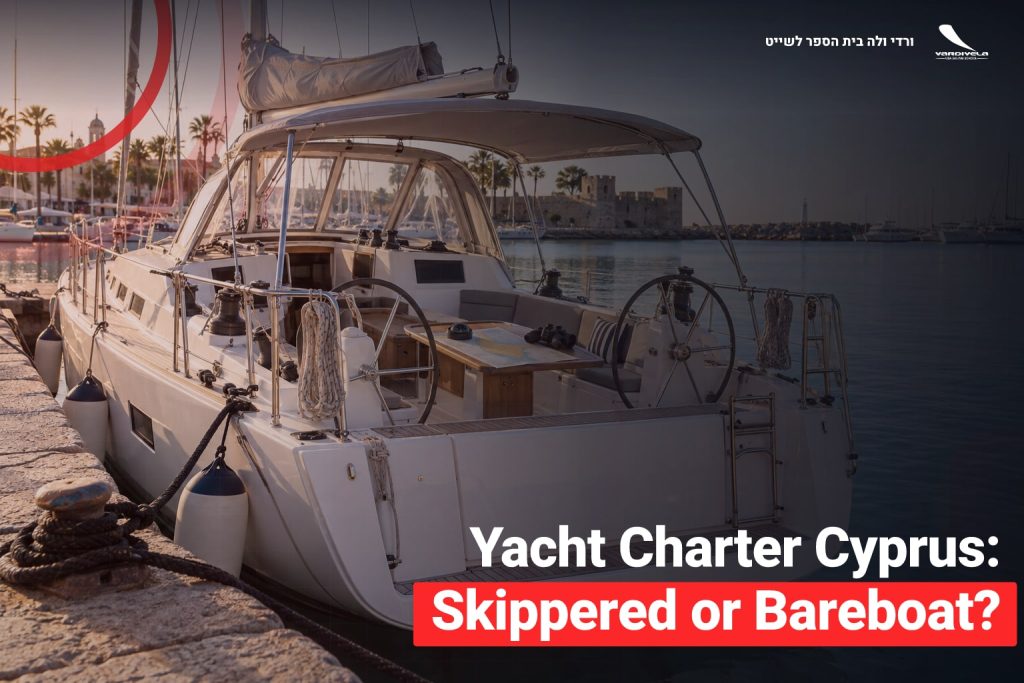
Yacht charter Cyprus options come down to one decision: do you hire a professional skipper, or do you take the yacht "bareboat" (rented without crew, with you as the legally responsible skipper)?
A skippered charter needs no license from you and suits first-time sailors, mixed groups and short trips.
A bareboat charter gives you full independence, but the charter company will usually expect a recognized skipper certificate and a record of sailing experience before it hands over the keys.
The right choice depends on three things: what you hold today, how much time you have on the water, and how much responsibility you want on board.
This guide walks through how each option works, what each one requires and how to decide. Vardi Vela Cyprus ISSA Sailing School trains skippers in Cyprus, so if you are weighing a license first, you can contact the school and go through the route that fits your plans.
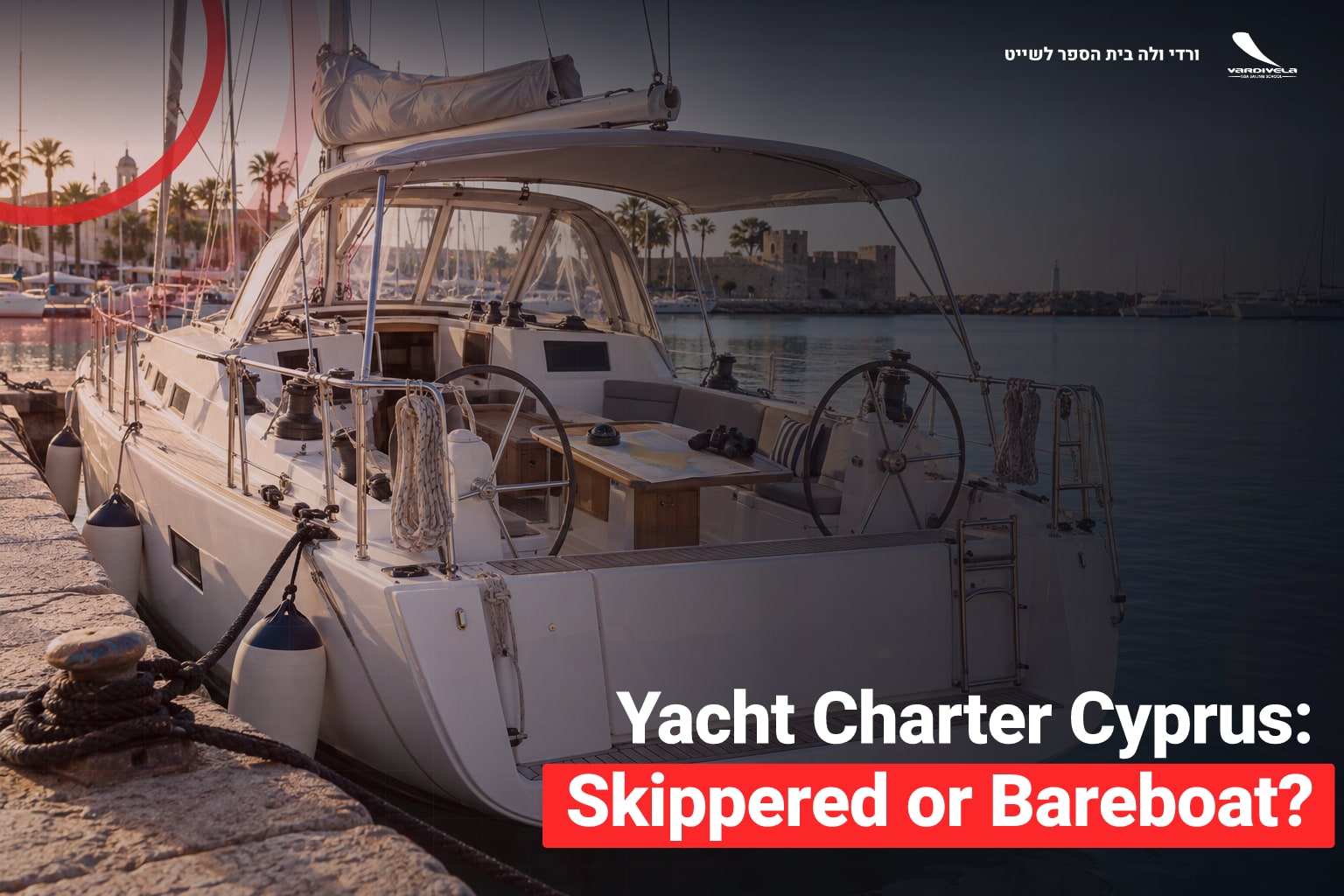
How does a yacht charter Cyprus booking work?
You rent a yacht for a fixed period, usually from a few days to a couple of weeks, and sail it between bays and marinas on a route you choose.
The yacht can be a sailing yacht or a motor yacht, and the charter company provides it with safety equipment, navigation instruments and a briefing at handover.
What changes between the two main models is who stands at the helm and who carries the responsibility.
In a "skippered charter" (a rental that includes a qualified professional who commands the yacht), the skipper plans the route, handles mooring and anchoring, and makes the weather decisions.
You and your guests are the crew, and you can steer or trim sails as much as you want.
In a bareboat charter, you or someone in your group does all of that.
The yacht rental page on the Vardi Vela Cyprus ISSA Sailing School site shows the kind of vessels available.
Check the current rental page for what is on offer, because availability and conditions change by season.
What is the difference between a skippered and a bareboat charter?
The difference is about responsibility more than about the yacht itself.
On a bareboat charter, the person named on the contract is responsible for the vessel, the people on board and any damage.
The charter company typically asks for a security deposit and sets out how insurance and excess work, so read those terms before you book.
On a skippered charter, the professional on board carries the navigation and seamanship, and your costs include the skipper.
Many companies also offer extras such as a hostess or a cook, but confirm what is included before you pay.
| Point of comparison | Skippered charter | Bareboat charter |
|---|---|---|
| License required from you | None for you as a guest | Recognized skipper certificate, as set by the charter company |
| Who navigates and moors | The professional skipper | You and your crew |
| Best for | First trips, families, groups with no license | Certified skippers who want to plan their own route |
| Route flexibility | High, planned together with the skipper | Full, within the charter terms |
| Learning on board | You can watch and practise under supervision | You learn by doing, with no instructor on board |
| Liability | Shared in line with the contract | Rests on the named skipper |
One more difference is easy to miss: the cost structure.
A skippered trip adds a professional's fee, while a bareboat trip adds the cost of getting qualified beforehand.
Neither is cheaper in every case, so compare the actual quotes for your dates.
Which license do you need to charter a yacht without a skipper?
There is no single rule that covers every charter company, so the first step is always to ask the company what it accepts.
As a general pattern in the Mediterranean, companies look for an internationally recognized certificate of competence, often linked to the "ICC" (International Certificate of Competence, a document that confirms you can operate a pleasure craft), together with a short sailing resume.
The Boat Master license at Vardi Vela Cyprus ISSA Sailing School meets the ICC standard and is officially recognized in about 22 countries, most of them in Europe.
In practice it is also recognized by yacht charter companies and marinas around the Mediterranean basin, in the Caribbean and in Southeast Asia.
Passing the exam is mandatory for receiving the certificate, and the licenses can be converted to an Israeli skipper license.
The school's skipper courses are split by vessel type and distance from shore, which affects the kind of trip you can plan:
- The inshore skipper course, for sail or power yachts, covers coastal sailing.
- The offshore skipper course, also for sail or power, covers longer passages away from the coast.
- The Master of Yacht course, in sail or power versions, is the more advanced certification path.
Each course has its own page with who it is for, duration, vessel type and license validity, so use those pages instead of relying on a summary.
Group courses run with a minimum of 3 participants, and a private course takes up to 2.
A license is not the only item on a bareboat checklist.
Many companies also ask that someone on board can use the VHF radio, and the VHF/SRC marine radio course is the usual way to cover that.
Our guide for licensed skippers on what to check before booking goes through the contract and handover details, so we will not repeat them here.
How do you choose between skippered and bareboat for your trip?
Start with an honest look at your experience.
If you have never commanded a yacht, a skippered charter is the sound choice, and it doubles as a first look at how a yacht is run day to day.
According to a professional charter skipper, the first day on a new yacht in an unfamiliar bay is the wrong day to learn how its anchoring gear and engine behave, and that is where an experienced person on board earns the fee.
Consider a worked example.
Six friends want a week on the water, and none of them holds a license.
A skippered charter lets all six relax and still take turns at the helm.
If one of them later completes an inshore course, the next trip can be bareboat with the same group, and the company will ask to see the certificate and some sailing history first.
Weather and sea state matter too.
A coastal trip in settled conditions is a reasonable first bareboat plan for a newly certified skipper.
A passage with long open stretches calls for more experience, or a skipper on board, whatever your certificate says.
Think about the people you are bringing.
A bareboat skipper responsible for children or guests who cannot help on deck needs more margin, not less.
Whenever you are unsure, book skippered, or ask whether the company offers a bareboat charter with a skipper on board for the first day only.
For ongoing practice after a course, the sailing club membership in Larnaca is a way to keep building hours before you take on a bareboat charter of your own.
Frequently asked questions
These are the questions sailors ask once the basic choice is made.
Can I start with a skippered charter and move to bareboat later?
Yes, and many people do.
Skippered trips let you see how a yacht is handled, and you can add a course when you want to captain your own trip.
Bareboat charter in Cyprus then becomes an option once you hold the certificate the company asks for.
How much sailing experience do charter companies ask for?
It varies by company, yacht size and area.
Some ask only for a certificate, others for a resume listing days at sea and previous yachts.
Ask for the requirements in writing before you pay a deposit.
Does a license earned in Cyprus work for charters elsewhere?
The Boat Master license meets the ICC standard and is officially recognized in about 22 countries, mostly in Europe.
In practice, charter companies and marinas in the Mediterranean basin, the Caribbean and Southeast Asia also recognize it.
Always confirm with the specific company, because the final decision is theirs.
Do I need a radio license to charter bareboat?
Companies often expect at least one person on board to be qualified to operate the VHF radio.
The VHF/SRC course covers that qualification, and it is worth confirming whether your chosen company asks for it.
Yacht Charter in Cyprus with Vardi Vela Cyprus ISSA Sailing School
Choosing between skippered and bareboat is a question of license, experience and appetite for responsibility.
A skippered trip lets you start sailing now.
A bareboat trip rewards the time you put into a recognized certificate and real hours on the water.
Vardi Vela Cyprus ISSA Sailing School has been teaching skippers since 2008 and is certified by the International Sailing School Association (ISSA).
Its courses lead to certificates that can be converted to an Israeli skipper license, and its ISSA PRO track leads to an international commercial skipper license.
If you want to move from guest to skipper, or to rent a yacht and plan the route yourself, contact the school and ask which course matches your plans for yacht charter Cyprus trips.