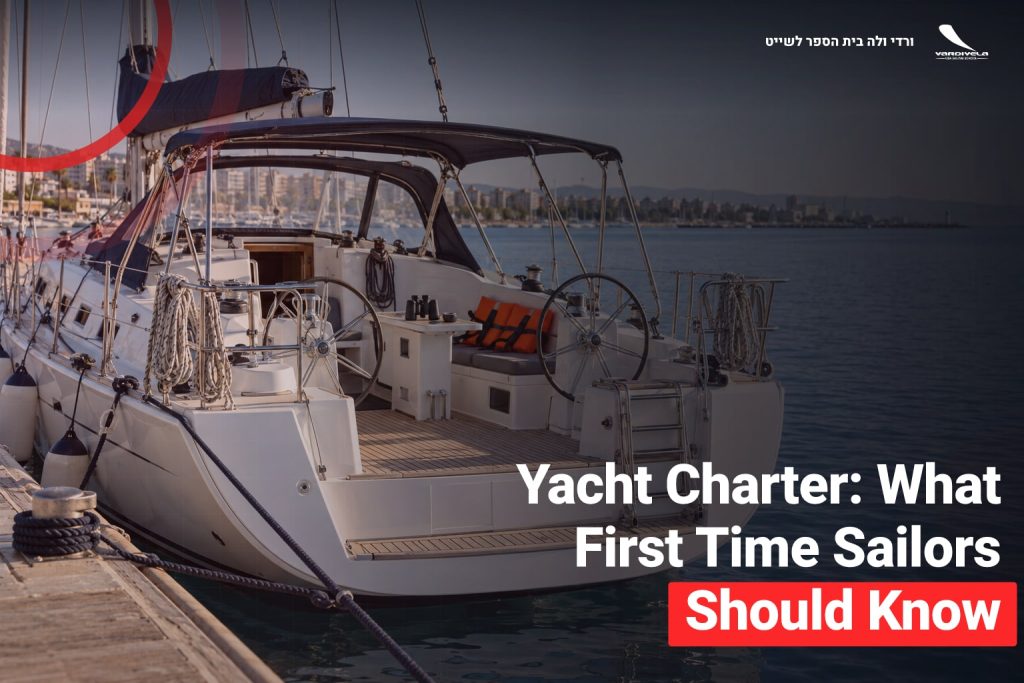
Yacht charter is the rental of a boat for a set number of days, and for first time sailors it comes down to three decisions: whether you sail the boat yourself or hire a professional skipper, which certificate the charter company will ask to see, and how much of the route you can handle in real conditions.
If you hold no license, a skippered charter lets you go to sea straight away.
If you want to run the boat yourself, expect to show a recognized skipper certificate, in most cases a marine radio certificate, and some logged time on the water.
At Vardi Vela Cyprus ISSA Sailing School in Larnaca, we train skippers on our inshore skipper course and offshore skipper course, and we also offer yacht rental in Cyprus.
This guide helps you choose the right type of charter for a first trip, so contact us when you are ready to plan yours.
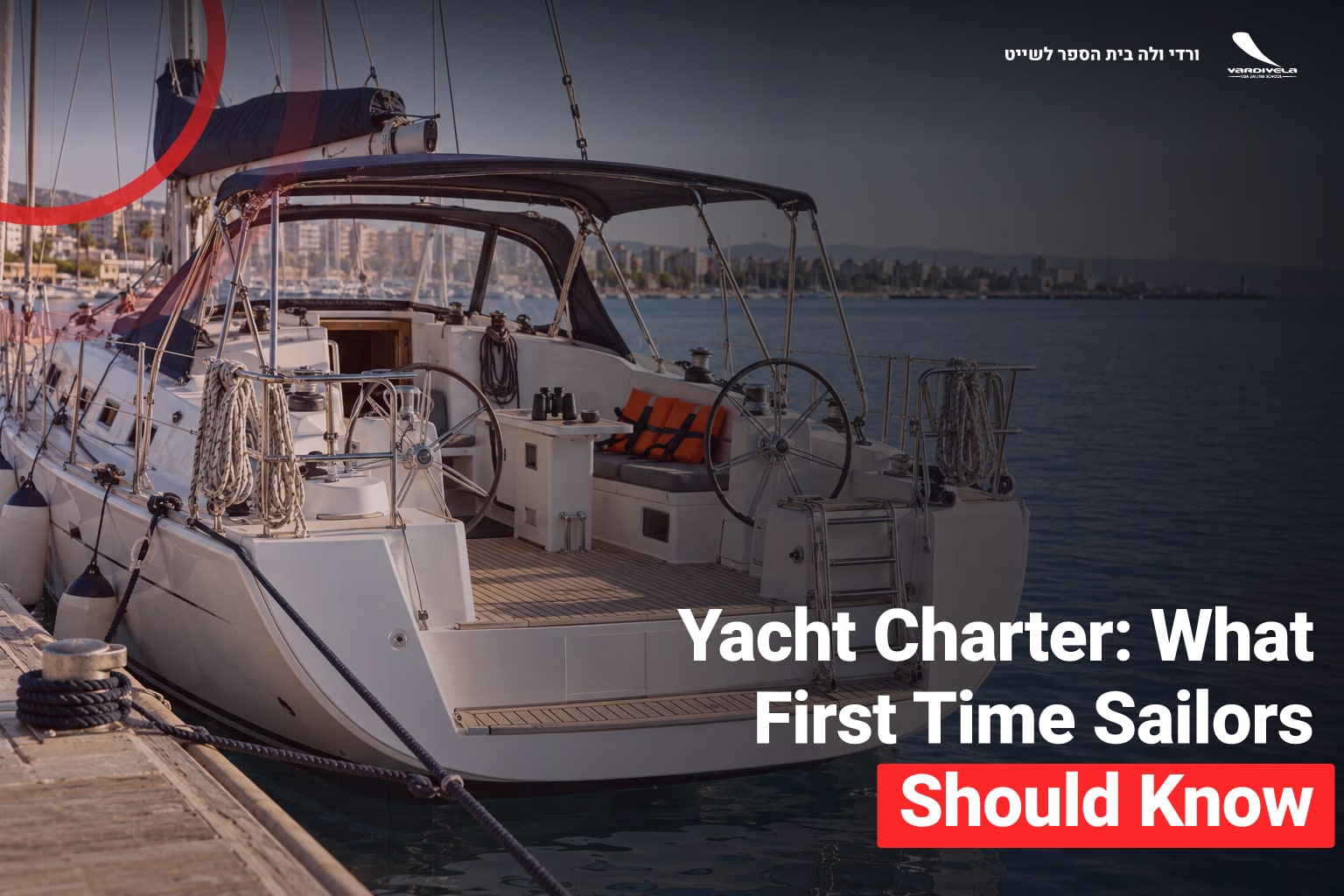
What is a yacht charter and which type suits a beginner?
A charter means you pay for the use of a yacht, with or without crew, for a fixed period, usually from a weekend to two weeks.
The price normally covers the boat and basic equipment.
Fuel, marina fees, food and the final cleaning are often billed separately, so read the contract line by line.
There are four common formats.
A "bareboat" charter means you rent the yacht with no crew and act as skipper yourself.
A "skippered" charter means a professional skipper comes aboard and is responsible for the boat, while you and your guests sail, relax or learn.
A "flotilla" is a group of several yachts that sail the same route together, led by a crew on a "lead boat" who handles briefings, repairs and route advice.
A "cabin charter" lets you book a single cabin on a yacht that is already sailing with other guests.
| Charter type | Who sails the boat | Certificate usually asked for | Suits you if |
|---|---|---|---|
| Bareboat | You and your crew | Skipper certificate, often with a sailing CV and a radio certificate | You already hold a license and have sea time |
| Skippered | A professional skipper | None for the guests | You are new to sailing or want a relaxed trip |
| Flotilla | You, with a lead boat nearby | Varies by operator, so confirm before booking | You want independence with support close by |
| Cabin charter | The host crew | None | You want to try life aboard before committing |
For a true beginner, a skippered charter is the most practical start.
You see how a skipper plans the day, reads the weather, handles the lines in a marina and checks the engine before departure.
According to a senior sailing instructor, most first-time mistakes happen at the pontoon, not on open water, because docking and anchoring are the maneuvers that beginners have practiced least.
A flotilla is a good second step if you hold a certificate but have not skippered in unfamiliar waters.
It keeps the freedom of your own boat while a lead crew is within radio range.
Our flotilla holidays are listed on the site, so you can compare them with other options before you decide.
Do you need a license to rent a yacht?
It depends on the format and the country.
For a skippered charter, you do not need a license, because the professional skipper holds the responsibility.
For a bareboat charter, almost every reputable company will ask for proof that you can run the boat safely.
Rules differ between countries and between operators, so ask for the exact requirement in writing before you pay a deposit.
The document most often requested is a skipper certificate that meets the "ICC" standard, the International Certificate of Competence.
It is a standardized proof that you can handle a pleasure craft, and charter companies use it because it is easy to verify.
Some also ask for a short sailing CV that lists the boats you have skippered, the hours and the waters.
The Boat Master license from our school meets the ICC standard and is officially recognized in around 22 countries, most of them in Europe.
In practice, it is also recognized by yacht charter companies and marinas around the Mediterranean, the Caribbean and South East Asia.
ISSA licenses can also be converted to an Israeli skipper license.
A passed exam is a condition for receiving any certificate, so attending the course alone is not enough.
A second document is the marine radio certificate.
Many operators expect at least one person aboard to hold a VHF/SRC certificate, because the VHF radio is the main tool for calling a marina, a port authority or help in an emergency.
Our VHF/SRC marine radio course covers the procedures and the exam, and it is usually the quickest qualification to add before a charter.
If you want to see how the different certificates compare, our ISSA pages explain the inshore, offshore and professional levels in detail.
Choose the level by the waters you plan to sail: inshore for coastal trips close to land, offshore for longer passages.
Then check that your charter company accepts it.
What should you check before booking your first charter?
Start with the boat.
A first charter does not need the biggest yacht on the list.
A boat you can handle alone in a marina is a better choice than one with extra cabins you do not need, because length and windage make berthing harder.
Match the number of berths to the people who will really sleep aboard, and be honest about how many of them can help with lines and sails.
Next, check the route and the season.
Wind and sea state change through the year in the eastern Mediterranean, and a trip that is easy in calm summer conditions can be tiring in a stronger breeze.
Plan short legs, with a safe harbor or anchorage within a few hours of each stop, and leave a spare day in the schedule for weather.
Then read the commercial terms carefully:
- The "security deposit", the amount held against damage, and the conditions for getting it back.
- What the insurance covers, and what the excess is if something is damaged.
- Whether a pre-departure briefing and a check-in inspection are included.
- The cancellation and weather policy, in writing.
- What is extra: fuel, dinghy engine, bed linen, final cleaning, skipper fee.
Finally, ask what happens on the day of handover.
A good company walks you through the engine, the electrical panel, the gas system, the anchor windlass and the safety gear before you leave the dock.
If a company hurries this step, treat it as a warning.
For the paperwork side, such as what licensed skippers should check before booking in Cyprus, ask the charter company to confirm every requirement in writing.
How can you build the skills before sailing on your own?
The fastest route is a structured course.
On our inshore skipper course you learn to handle a yacht in coastal waters: maneuvering under engine and sail, mooring, anchoring, navigation, weather and the rules of the road at sea.
The course finishes with an exam, and a pass is required for the certificate.
A group course starts with a minimum of three participants, and a private course takes up to two.
If you plan longer passages, the offshore skipper course adds passage planning and night and open-water navigation.
Those who prefer a motor yacht can choose the power versions, and the Master of Yacht sail and power certifications are available for those who want a higher level.
Pick the vessel type that matches the boat you will actually charter, because a sailing certificate is not the same as experience on a motor yacht.
Courses give you the framework, but confidence comes from hours at the helm.
Sailing club membership in Larnaca is one way to keep building sea time after you qualify, with regular access to boats rather than one trip a year.
Many sailors also rent a boat for a day or a weekend with a skipper first, then move up to a week on their own once they have repeated the same maneuvers several times.
A useful self-test before a bareboat week: can you berth the boat in a crosswind, anchor and check that it holds, reef the mainsail early, and call a marina on VHF without hesitation?
If one of these is shaky, add a skippered day or a refresher before you sign.
The school was established in 2008 and is accredited by the International Sailing School Association (ISSA), so our instructors can tell you honestly which of these skills you still need to practice.
Frequently asked questions about chartering as a beginner
These are the practical questions first time sailors ask us before their first booking.
Is a VHF radio certificate required on a charter?
It depends on the country and the operator, but many companies expect at least one crew member to hold a VHF/SRC certificate.
Even where it is not mandatory, it is worth having, because the radio is your main contact with marinas and rescue services.
Ask the charter company which certificate they accept before you book.
How big should the boat be for a first charter?
Choose the smallest yacht that gives your group enough berths and storage.
Smaller boats are easier to dock, anchor and sail with a small crew.
Extra length mostly adds berthing difficulty, so take it only if you need the cabins.
What should you pack for a week on a yacht?
Pack soft bags rather than hard suitcases, because storage is tight.
Bring non-marking, flat-soled shoes, sun protection, a light waterproof jacket, a hat with a strap and any personal medication.
Leave heavy items at home, and bring a plan for seasickness if anyone in the group is prone to it.
What happens if the weather turns bad during a charter?
You stay in port or move to a more sheltered anchorage, and you do not push on to keep to the schedule.
A skippered charter makes this decision easier, because the skipper has experience reading forecasts.
On a bareboat or flotilla trip, check the forecast every evening and every morning, and keep a spare day in your plan.
Yacht Charter for First Time Sailors: Your Next Step With Vardi Vela Cyprus ISSA Sailing School
Your first week at sea goes better when the format matches your experience.
Start with a skippered trip or a flotilla if you are new, confirm in writing which certificate and radio qualification the company needs, and choose a boat you can dock without stress.
Then build skills step by step, from a day on the water to a full course and regular sea time.
Vardi Vela Cyprus ISSA Sailing School teaches the courses that charter companies ask about, from inshore and offshore skipper levels to the VHF/SRC radio course, and can also help with yacht rental in Cyprus.
If you are planning your first yacht charter, contact us in Larnaca to talk through your experience, the right certificate and the next available course.