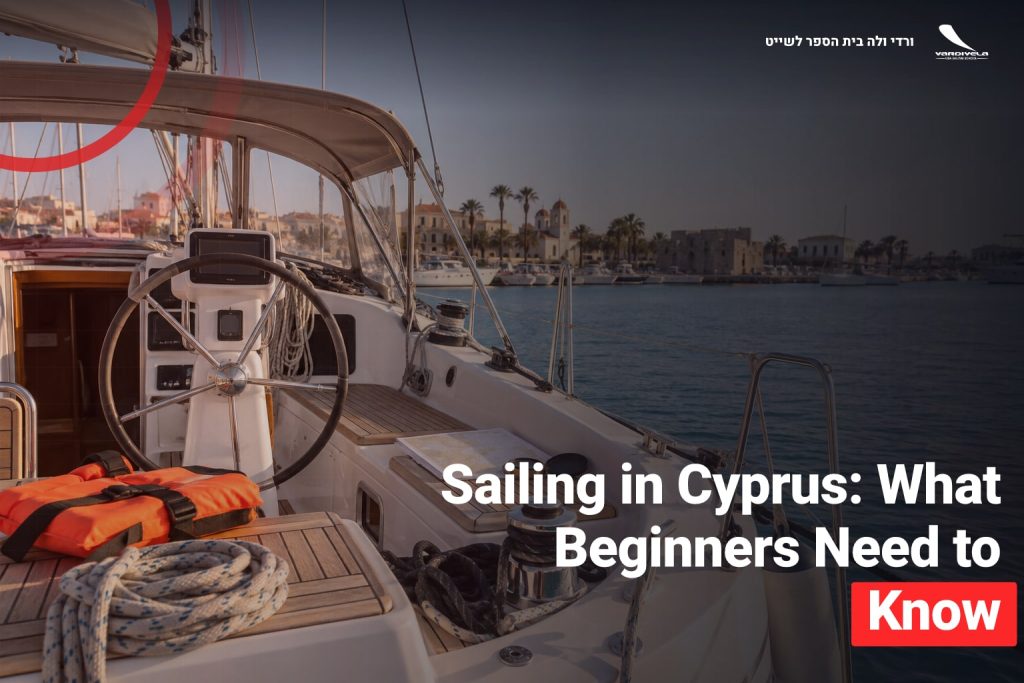
Sailing in Cyprus is a realistic first step for a complete beginner: the water is warm for much of the year, you do not need to own a boat, and you do not need a license to start learning, because the course is how you earn it.
What you do need is training before you take charge of a yacht, and the usual order is a crew member or inshore skipper course, then a marine radio certificate, then practice hours on a boat you rent or share through a club.
Vardi Vela Cyprus ISSA Sailing School has taught these courses since 2008 and is accredited by ISSA (International Sailing School Association).
If you are weighing up where to begin, the school runs a sailing crew member course, inshore and offshore skipper courses, a VHF/SRC radio course, yacht rentals and a sailing club in Larnaca.
Contact the school to talk through which starting point fits you.
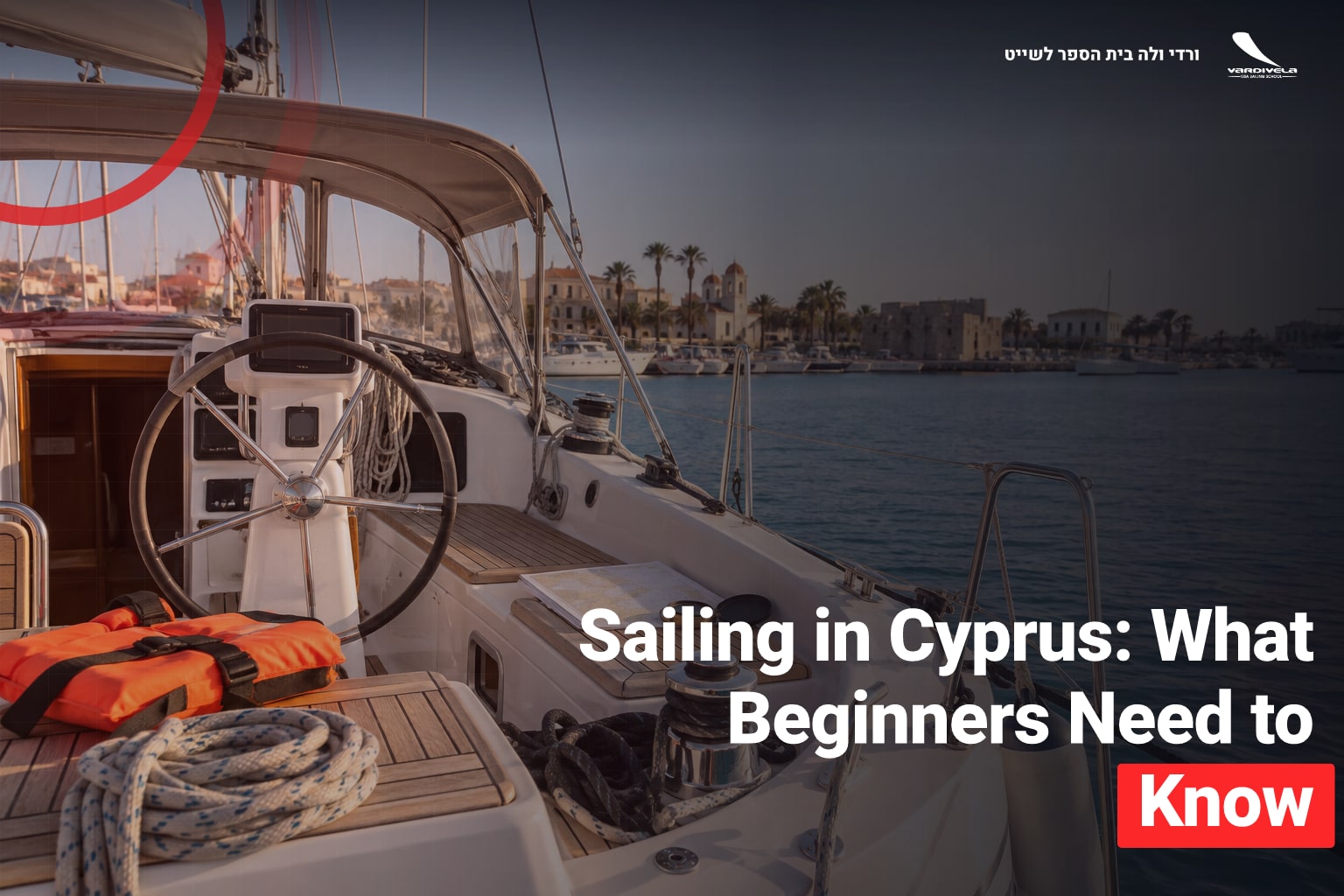
What Is Sailing in Cyprus Like for a Complete Beginner?
Cyprus is the third-largest island in the Mediterranean, after Sicily and Sardinia, and most training takes place along the coast around Larnaca.
Beginners usually work in coastal waters, which means short passages, regular views of land and plenty of time to repeat each manoeuvre until it feels natural.
The main season runs through the warmer months, from spring into autumn.
On many summer days a "sea breeze" (a wind that builds in the afternoon as the land heats up and pulls air in from the water) shapes the day.
Morning sessions are often lighter and calmer, and afternoons give you more wind to practise with.
A good instructor plans the lesson around this pattern instead of fighting it.
Two kinds of boat are used.
A sailing yacht moves with the wind and teaches you sail trim, steering and tacking (turning the bow through the wind to change direction).
A power yacht is driven by engines and teaches you boat handling, docking and navigation.
Both are valid routes, and your choice depends on the kind of boat you picture yourself on.
According to an experienced sailing instructor, "most beginners fixate on the sails, but the skill that matters first is reading the wind and the sea, because everything else follows from that." It is worth keeping in mind during your first lessons: a calm, observant student progresses faster than an energetic one.
You do not need to be an athlete.
Basic comfort on water, the ability to follow instructions and willingness to handle ropes are enough.
Physical demands on a modern cruising yacht are moderate, and the instructor explains each task before you do it.
Do You Need a License or Certificate to Get Started?
To learn, no.
A beginner course is designed for people who have never been on a yacht.
To skipper a boat yourself, especially a chartered one, you will almost certainly be asked for a recognised certificate.
The exact requirements depend on the vessel, the waters and the rental company, so ask before you book rather than assuming.
The ISSA license is the certificate that Vardi Vela Cyprus ISSA Sailing School issues.
Two points matter for a beginner.
First, passing the exam is mandatory: attending the course alone does not earn the certificate.
Second, the licenses can be converted into an Israeli boat operator license, which is relevant if you plan to sail at home as well as abroad.
Erez Vardi, who founded the school, represents ISSA on the ICC committee at the United Nations, and that work is linked to the international framework behind these certificates.
It also helps to separate three terms that beginners often mix up:
- "Certificate of competence": proof that you completed training and passed an exam.
- "Skipper": the person legally and practically responsible for the boat and everyone on it.
- "ICC" (International Certificate of Competence): a standard that lets a skipper operate a pleasure craft in the waters of countries that accept it.
If you only want to join a trip as a passenger or as helping crew, you do not need a skipper certificate at all.
A crew member course is still useful, because it teaches you the vocabulary and safety routines so you are not a passenger in the dark.
Which Beginner Course Should You Choose?
The right course depends on what you want to do after it.
The table below summarises the courses a beginner is most likely to consider.
Duration, prerequisites and the current schedule differ for each one, so check the course page and the annual schedule before you commit.
| Course | Best for | Vessel type |
|---|---|---|
| Sailing crew member course | Complete beginners who want to join a yacht as crew or learn the basics first | Sailing yacht |
| Inshore sailing yacht skipper course | People who want to skipper a sailing yacht in coastal waters | Sailing yacht |
| Inshore power yacht skipper course | People who prefer engines and want to skipper a motor yacht near the coast | Power yacht |
| Offshore skipper courses | Skippers who want to go beyond coastal waters; see the course page for prerequisites | Sailing or power yacht |
| VHF/SRC marine radio course | Anyone who will skipper or crew and needs to use a marine radio | Any vessel with a VHF radio |
If you are unsure, start with the crew member course or the inshore skipper course.
They are the natural entry points, and an offshore qualification makes sense only after you have logged hours on the water.
The VHF/SRC course is worth taking early.
A marine radio is the way you contact a marina, another vessel or the coast guard, and knowing the correct procedure matters most on the day something goes wrong.
It is a short, practical add-on, not a long commitment.
When you choose between sail and power, be honest about what you want from the water.
If you imagine quiet passages and trimming sails, take the sailing route.
If you want to cover distance, reach anchorages quickly or travel with a larger group, a power yacht course may suit you better.
How Should You Prepare, and What Comes Next?
Preparation is simple.
Before the first lesson, learn a handful of terms so the instructor does not have to stop and translate. "Port" and "starboard" are the left and right sides of the boat when you face the bow.
The "helm" is the steering position.
The "bow" is the front and the "stern" is the back.
Learning these in advance saves time on the water.
Pack for sun and spray rather than for style:
- Non-marking, soft-soled shoes that grip a wet deck.
- A hat, sunglasses with a retaining strap and a high-factor sunscreen.
- A light waterproof layer, because wind on the water feels cooler than it does ashore.
- A refillable water bottle, since dehydration arrives faster than you expect.
In the first sessions, three habits are worth building right away: check the forecast and the wind direction before you leave the dock, wear a life jacket whenever the instructor asks, and say aloud what you are about to do before you do it.
Those habits are what separate a confident skipper from a nervous one.
What comes after the course matters as much as the course itself.
A certificate proves you passed, but sea time is what turns it into skill.
There are two practical routes.
You can rent a yacht once you are qualified, and the school offers yacht rentals for that purpose.
Or you can join the Vardi Vela Cyprus sailing club in Larnaca, which is designed for members who want to keep sailing without owning a boat.
Both services have their own pages that describe terms and availability, so look there for the details.
A sensible plan for the first year is simple.
Finish the course, take the radio certificate, then book regular short outings with the same crew so you repeat the same manoeuvres in different conditions.
Repetition in familiar waters builds judgement faster than occasional long trips.
Beginner Questions About Sailing in Cyprus
These are the questions beginners ask us most often before they sign up.
Is a group course or a private course better for a beginner?
A group course needs a minimum of 3 participants, and a private course takes up to 2 participants.
A group suits people who learn well alongside others and want a shared pace.
A private course suits those who want individual attention, have a tight schedule or are learning as a couple.
The content is the same, the difference is the pace and the attention you receive.
Is there an exam at the end of the course?
Yes.
Passing the exam is a condition for receiving the certificate, so plan some study time for the theory and ask your instructor which topics to revise.
Check the course page for the current format of the assessment.
Will my certificate be recognised outside Cyprus?
The Boat Master license meets the ICC standard and is officially recognised in a number of countries, most of them in Europe.
In practice it is also accepted by many yacht charter companies and marinas, although acceptance varies from place to place.
Rules still differ by country and by rental company, so confirm the requirement before you book a charter.
Do I need to own a boat to keep practising after sailing in Cyprus?
No.
Most people who learn here do not own a boat.
Renting a yacht by the day, or joining a club, gives you access to a vessel without the costs of maintenance, mooring and insurance that come with ownership.
Start Sailing in Cyprus with Vardi Vela Cyprus ISSA Sailing School
A good start comes down to four decisions: pick sail or power, choose between a crew member and a skipper course, add the radio certificate early, and plan where your practice hours will come from.
None of them requires prior experience, and none requires you to buy a boat.
Vardi Vela Cyprus ISSA Sailing School, established in 2008 and accredited by ISSA, covers every step in that path, from the first lesson to a recognised certificate and continued practice through rentals and the sailing club.
If you are ready to begin sailing in Cyprus, contact the school, tell them what you want to do on the water and ask which course and schedule fit you.